China has become a major sourcing base for Garden Solar Light products, but supplier quality varies sharply. This article examines leading manufacturers through measurable criteria, not catalogue claims alone. These criteria include photovoltaic efficiency, battery chemistry, lumen output, weather protection, warranty terms, factory experience, and export documentation.
The global context is expanding. IRENA’s Renewable Capacity Statistics 2024 reported approximately 346 gigawatts of new solar capacity added worldwide in 2023. The International Energy Agency also described solar power as the fastest-growing renewable technology. IEA Executive Director Fatih Birol said, “Solar is the new king of the world’s electricity markets.” These figures do not measure garden lighting directly. They still show the supply foundation supporting this category.
The comparison is not perfectly neat. Many market reports combine pathway lights, street lamps, security fixtures, and decorative products. Therefore, supplier rankings require closer verification. A reliable factory should explain panel wattage, battery capacity, charging time, and operating hours under cloudy conditions. It should also provide practical test evidence, such as IP65 protection, corrosion resistance, and repeated battery-cycle results. Buyers should inspect production photos, sample consistency, and after-sales response before placing large orders. A bright sample can still hide weak batteries. That matters.
This guide identifies China’s top Garden Solar Light suppliers by examining product specialization, manufacturing capability, customization support, certifications, pricing transparency, and customer reliability. The findings may not suit every project. Residential gardens, hotels, parks, and retailers need different performance priorities.
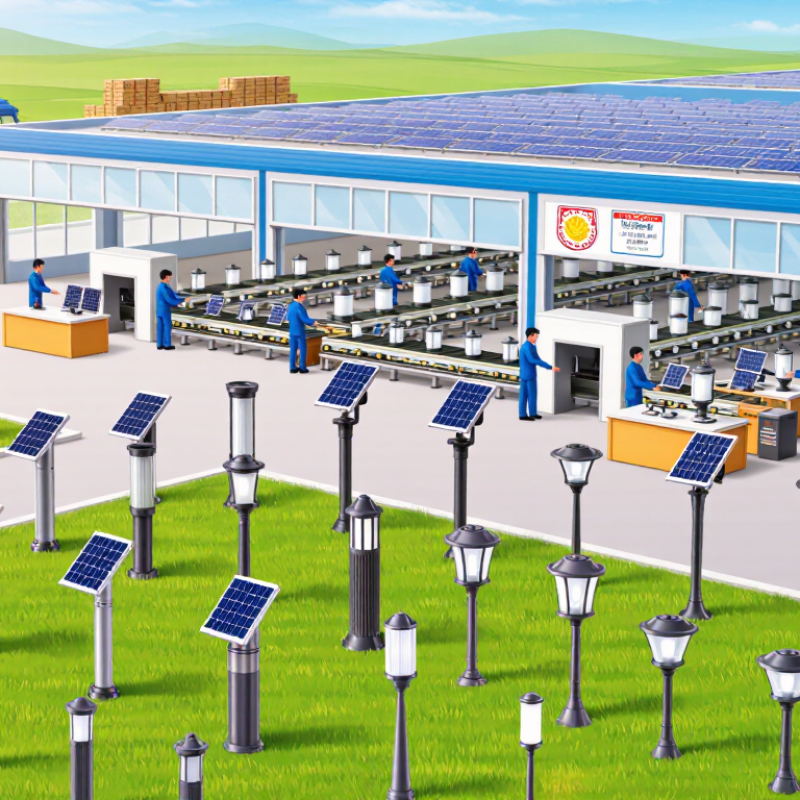
What Are China Top Garden Solar Light Suppliers?
Garden solar lights are compact outdoor lighting systems powered by sunlight. A photovoltaic panel converts sunlight into electricity during the day. A charge controller directs that energy into a rechargeable battery. At dusk, a light sensor activates the LED automatically. Simple, but not foolproof.
The U.S. Department of Energy reports that LEDs use at least 75% less energy and last up to 25 times longer than incandescent lamps. This explains their popularity in pathways, patios, and flowerbeds. However, brightness depends on more than LED wattage. Panel size, battery capacity, charging time, and shade all matter. A light under dense leaves may glow weakly after midnight. The label can mislead.
IEA PVPS reported global photovoltaic capacity above 1,400 gigawatts by the end of 2023, showing how widely solar technology has developed. Yet garden lights remain small, sensitive systems. When comparing China-based suppliers, buyers should request tested battery specifications, operating-hour data, and photometric reports. Check whether claimed runtime was measured under full sunlight or laboratory conditions. I also recommend reviewing ingress protection results under IEC 60529, especially for rainy gardens. IP65 may resist dust and water jets, but it does not guarantee perfect performance after flooding. That distinction is often missed. Supplier reliability should include sample testing, production consistency, clear manuals, and realistic seasonal performance claims.
A practical comparison of common garden solar light types, operating principles, technical specifications, and supplier evaluation criteria
| Dimension | Garden Solar Light Type or Feature | Typical Specification or Fact | How It Works | Key Buying Consideration |
|---|---|---|---|---|
| Product Type | Solar Pathway Light | Usually designed for low-level illumination along paths, driveways, and borders. | A photovoltaic panel charges a rechargeable battery during daylight; an LED turns on automatically at night. | Check light distribution, ground-stake stability, and spacing between fixtures. |
| Product Type | Solar Spot or Flood Light | Provides more focused or wider illumination for trees, walls, entrances, and landscape features. | A light sensor activates the LED after the ambient light level falls below a preset threshold. | Review beam angle, adjustable head design, brightness, and mounting options. |
| Product Type | Solar String Light | Uses multiple small LEDs connected along a cable for decorative garden or patio lighting. | The solar panel stores energy in a battery and powers the LED string after dark. | Evaluate cable length, LED spacing, weather resistance, and battery capacity. |
| Product Type | Solar Wall or Fence Light | Designed for mounting on walls, fences, steps, or posts. | The integrated or remote solar panel converts sunlight into electrical energy for battery storage. | Confirm mounting hardware, panel exposure, detection range, and installation height. |
| Energy Conversion | Photovoltaic Solar Panel | Common panels use monocrystalline or polycrystalline silicon cells. | Solar cells convert sunlight into direct-current electricity during the day. | Panel size, cell efficiency, shading, orientation, and seasonal sunlight affect charging performance. |
| Energy Storage | Rechargeable Battery | Nickel-metal hydride and lithium-ion batteries are commonly used in outdoor solar lights. | The battery stores daytime energy and supplies electricity to the LED at night. | Compare battery chemistry, capacity, replacement availability, and expected cycle life. |
| Lighting Technology | LED Light Source | LEDs generally consume less electricity and have a longer service life than traditional incandescent lamps. | An LED converts electrical energy into light when current flows through its semiconductor material. | Check lumen output, color temperature, color rendering, and light uniformity instead of wattage alone. |
| Automatic Control | Light Sensor | Most basic solar garden lights use an integrated photoelectric sensor. | The sensor detects daylight and darkness, switching charging and lighting modes automatically. | Look for reliable dusk-to-dawn operation and a manual power switch for storage or transport. |
| Operating Time | Night-Time Runtime | Runtime depends on sunlight, battery capacity, LED output, temperature, and operating mode. | Stored battery energy is gradually consumed by the LED after sunset. | Request tested runtime data under defined charging and brightness conditions rather than relying on a single maximum claim. |
| Weather Protection | Ingress Protection Rating | Outdoor products are commonly rated IP44, IP54, IP65, or higher. | The first IP digit relates to solid-particle protection; the second relates to water protection. | IP65 indicates dust-tight protection and protection against water jets; it does not mean the product is suitable for submersion. |
| Operating Environment | Temperature and Seasonal Performance | Cold weather can reduce battery performance, while cloudy or rainy days reduce charging energy. | Lower solar input and battery efficiency can shorten illumination time during winter or extended overcast periods. | Choose a larger panel or battery for regions with limited winter sunlight and confirm the stated operating temperature range. |
| Supplier Evaluation | Production Capability | A suitable supplier should be able to provide product specifications, samples, inspection records, and consistent batch quality. | Standardized assembly and testing help maintain stable charging, lighting, sealing, and battery performance. | Ask about sample approval, production lead time, quality-control procedures, and defect handling. |
| Supplier Evaluation | Customization Options | Common options include housing color, material, LED color, battery type, packaging, logo placement, and motion-sensor settings. | Component and software changes can modify brightness, runtime, activation behavior, and appearance. | Confirm minimum order quantities, tooling charges, sample fees, and whether customized parts affect delivery time. |
| Materials | Housing and Structural Parts | Common materials include ABS plastic, polycarbonate, aluminum alloy, stainless steel, and glass. | The housing protects the circuit, battery, LED, and solar panel from outdoor conditions. | Consider UV resistance, corrosion resistance, impact strength, heat dissipation, and long-term appearance. |
| Compliance | Testing and Documentation | Depending on the destination market, buyers may request electrical safety, electromagnetic compatibility, battery transport, and environmental compliance documents. | Testing verifies that the product meets defined safety, interference, material, or transport requirements. | Verify that documents match the exact model, battery configuration, factory, and target market. |
| Sustainability | Energy Use and Maintenance | Solar garden lights use renewable daytime energy and typically require no wired mains connection. | The system operates independently through solar charging, battery storage, LED illumination, and automatic control. | Prioritize replaceable batteries, recyclable packaging, durable housings, and accessible spare parts where possible. |
They are outdoor lights powered by sunlight. A photovoltaic panel charges a rechargeable battery during daylight. At dusk, a sensor activates the LED automatically. Simple, but not foolproof.
Brightness depends on the panel, battery, charging time, and shade. A light beneath dense leaves may weaken after midnight. Beam angle and mounting height also change the visible result. Wattage alone can mislead.
Pathway lights mark borders and walkways with soft downward beams. Spotlights illuminate trees, walls, signs, or garden features. Wall-mounted lights suit entrances and patios. String lights, lanterns, deck lights, and in-ground lights offer decorative options.
Request the business license, factory address, production photos, and inspection records. Confirm whether the supplier is a factory or a trading company. Ask for samples from the actual production batch. Showroom samples can hide weak batteries.
Test charging on sunny and cloudy days. Record brightness and operating time after sunset. Inspect panel alignment, wiring, seals, and color consistency. Place several units together. Differences become obvious.
Suppliers should state battery chemistry, capacity, panel size, and charging conditions. They should provide measured runtime data. Ask whether testing used full sunlight or laboratory conditions. Twelve hours may become much less in winter.
IP65 generally resists dust and water jets. It does not guarantee protection after flooding or standing water. Check drainage around in-ground and deck lights. Water may collect where installation is careless.
Reliable suppliers provide consistent production, clear manuals, and realistic seasonal claims. They explain material tolerances, warranties, replacements, and defect handling. Independent test reports are more useful than unclear certificates. Fast replies are not enough.
Do not judge products by photographs or brightness figures alone. Sunlight, shade, temperature, and installation angle affect performance. I once trusted a long runtime claim without checking local conditions. That was my mistake.
This article explains what Garden Solar Light products are, how their solar panels convert daylight into stored energy, and how rechargeable batteries power LEDs after dark. It also explores the main product categories, including pathway lights, lawn decorations, wall-mounted fixtures, spotlights, and motion-sensing models. Understanding differences in brightness, battery capacity, waterproofing, materials, installation methods, and lighting controls can help buyers select solutions that match different outdoor environments and design goals.
The article also outlines what distinguishes a top China garden solar light supplier, such as consistent manufacturing standards, reliable quality control, practical customization services, clear communication, and dependable delivery capabilities. It provides a structured approach to evaluating suppliers by reviewing samples, certifications, production processes, packaging, warranties, and customer support. Finally, it explains how to compare suppliers according to project requirements, budget, order volume, lead time, and long-term performance, helping buyers make a confident and well-informed sourcing decision.

 Jianheng