Outdoor lighting should make paths easier to read without adding wiring or a large electricity bill. Solar ground lights offer a practical option: low fixtures can mark a walkway, border a planting bed, or soften the edge of a patio. They charge during daylight and turn on after dark, so installation is often as simple as placing each light in a suitable spot. No trenching. No outdoor power outlet.
The wider energy shift provides useful context, though it does not guarantee how any individual light will perform. IRENA’s Renewable Capacity Statistics 2024 reports that global solar capacity grew by about 346 gigawatts in 2023. That figure reflects utility-scale and distributed systems, not garden products. Still, it shows how rapidly solar technology is expanding. For homeowners, the relevant questions are more immediate: Will the panel receive enough sun? Can the battery support the expected hours? Is the fixture rated for local weather?
A Solar Ground Light can help define a path while keeping the garden visually uncluttered. Picture a warm pool of light beside a stone step, rather than a bright beam across the whole yard. Results vary. Shade, winter daylight, battery age, and placement all matter, and small panels cannot overcome poor exposure. This is worth admitting. Choosing well means checking the product’s stated runtime, weather resistance, and replaceable-battery options—not relying on attractive photos alone. Done carefully, solar ground lighting can be a simple, flexible way to improve outdoor visibility with less dependence on mains power.
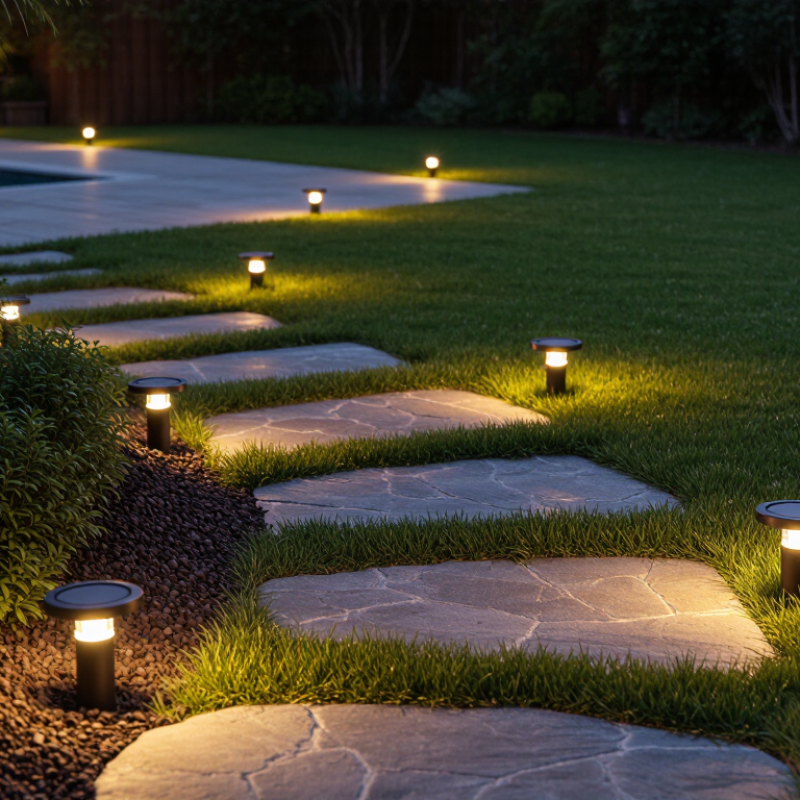
Solar ground lights combine a small photovoltaic panel, rechargeable battery, charge controller, LED, and weather-resistant housing. The panel captures daylight; the controller manages charging and helps prevent battery over-discharge. At dusk, a light sensor switches the LED on. Simple in principle. Careful engineering matters. The battery and electronics sit close to wet soil, while the panel may be shaded by grass, leaves, or nearby walls. A sealed enclosure, drainage-aware structure, and durable lens help protect performance.
Their design balances light output with limited stored energy. A broad, low-glare lens can mark a path without shining directly into people’s eyes. The stake or flush-mounted body also affects stability and installation. The IEA Photovoltaic Power Systems Programme reported that global cumulative solar PV capacity exceeded 1.6 terawatts in 2023, reflecting the technology’s expanding role. That figure describes the wider solar sector, not the expected output of an individual light. Real runtime still depends on panel size, sunlight, battery condition, and local weather. One cloudy week can expose a weak design.
Tips: Place the panel where it receives several hours of direct sun, and keep it clear of soil and leaves. Check the product’s battery-replacement options and ingress-protection rating before installation. Ratings help, but they do not guarantee years of trouble-free use.
| Design element | What it is | Common design characteristics | Outdoor-use consideration |
|---|---|---|---|
| Solar ground light | A low-profile outdoor light installed in or on the ground, powered by energy collected from sunlight. | Typically combines a solar panel, rechargeable battery, LED, light sensor, and protective housing. | Useful for marking paths, garden edges, steps, and driveways without running a mains power cable to each light. |
| Solar panel | A photovoltaic cell that converts daylight into electrical energy for storage. | Often integrated into the top surface; some designs use a separate panel connected by a short cable. | Direct, unobstructed daylight generally supports better charging. Shade, dirt, and short winter days can reduce energy collection. |
| Rechargeable battery | Stores energy gathered during the day and supplies power to the LED after dark. | Capacity, chemistry, and replaceability vary by model; batteries are commonly housed inside the fixture. | Nightly operating time depends on battery condition, charging conditions, temperature, and light output settings. |
| LED light source | A small, efficient light-emitting diode that provides illumination using stored battery power. | May emit warm or cool white light; some fixtures use multiple LEDs or optics to spread light across the ground. | Ground lights are generally suited to accent or wayfinding illumination rather than lighting a large area like a floodlight. |
| Light sensor and control circuit | Detects ambient light and manages when the fixture turns on or off. | Many designs switch on automatically at dusk and off at dawn; some include a manual switch or selectable mode. | Keep the sensor exposed to natural light and away from nearby bright lamps that may affect its operation. |
| Housing and materials | The enclosure that protects the electrical parts and supports the fixture in its installed position. | Common materials include plastic and metal, with a transparent or translucent cover over the light source. | Choose a construction suited to expected weather and foot traffic; a ground light is not automatically suitable for vehicle loads. |
| Weather protection | Seals and enclosure design help limit the entry of dust and water. | Outdoor models may list an ingress protection (IP) rating; the exact level differs between products. | Check the stated rating and installation instructions for the location, especially where water may collect or spray directly onto the fixture. |
| Installation format | The method used to secure the light at ground level. | Common formats include recessed fixtures set into a surface and stake-style lights placed in soil or lawn edges. | Recessed models need a suitable opening and drainage; stake-style models need stable ground and adequate clearance for the panel. |
| Energy source and wiring | The light uses solar-charged stored energy rather than a direct connection to household mains power. | Most self-contained units have no external power cable; separate-panel designs may have a cable between panel and light. | This can simplify placement where outdoor wiring is inconvenient, but performance still depends on adequate daylight and battery storage. |
A small panel collects daylight and charges a rechargeable battery. At dusk, a light sensor switches on the LED. Simple, but sunlight matters.
Place them beside the walking line, not in it. Even spacing can mark the route without creating obstacles. Test the layout after dark.
Choose spots with several hours of direct sun. Shade from walls, branches, or leaves can reduce evening brightness. Cloudy weeks can reveal weak performance.
Yes. They can outline paving edges, steps, gates, and entryways. Keep fixtures level and aim for a soft glow, not eye-level glare.
They can highlight a tree trunk, shrubs, or stone. Deep shade may leave the battery undercharged, so evening light can fade early. Not always reliable.
Review the weather-resistance rating, battery capacity, and battery-replacement guidance. A rating helps, but it cannot promise years without problems.
Check that the soil is firm, then press each stake in by hand. Loosen hard ground with a small garden tool. Do not hammer the light.
Wipe panels with a soft, damp cloth to remove dust and leaves. After heavy rain or frost, inspect stakes, covers, and the inside for moisture. They are not maintenance-free.
A Solar Ground Light is a compact outdoor fixture designed to sit close to the ground, with a solar panel, rechargeable battery, and energy-efficient light source protected inside a weather-resistant housing. During the day, its panel converts sunlight into electricity and stores that energy in the battery. When daylight fades, a built-in sensor can switch the light on automatically, providing illumination without a connection to household wiring.
Solar ground lights can help define walkways, highlight garden edges, and add gentle lighting to patios or driveways. They are convenient to place, use renewable energy, and typically require little ongoing attention. To choose suitable lights, consider their brightness, expected runtime, weather resistance, and the amount of direct sunlight available. Install them where their panels can receive ample sun, position them securely, and clean the panels periodically. Checking the fixtures and batteries from time to time helps maintain reliable performance throughout the seasons.

 Jianheng