Choosing Solar Power Lights is no longer a simple matter of comparing brightness and price. Global buyers must assess performance, durability, safety, and service support together. The market is expanding rapidly. IRENA’s Renewable Capacity Statistics 2024 reported 345.5 gigawatts of new solar capacity added worldwide in 2023. This wider solar growth supports better components, yet it does not guarantee that every outdoor light is reliable.
Quality still varies.
The World Bank and Lighting Global’s Off-Grid Solar Market Trends Report highlights the growing importance of solar products for communities with limited grid access. For buyers, this means examining practical details closely. Check lumens, battery chemistry, charging time, and expected nighttime runtime. Review the IP rating before installing lights near rain, dust, or coastal air. A lamp rated IP65 may suit a garden path, while exposed commercial sites may require stronger protection. Temperature range also matters. A battery that performs well in a mild warehouse may weaken during a cold winter or extreme summer.
The best choice depends on location and use. A homeowner may prioritize warm light and appearance. A distributor may need stable packaging, replacement parts, and consistent certifications. Professional buyers should request test reports, warranty terms, and documented performance data. Standards and claims need verification. Marketing language can be vague.
This guide uses industry evidence and practical buying experience to compare Solar Power Lights for different global markets. Some conclusions remain imperfect, because manufacturers report specifications differently. Careful questions reduce expensive surprises.
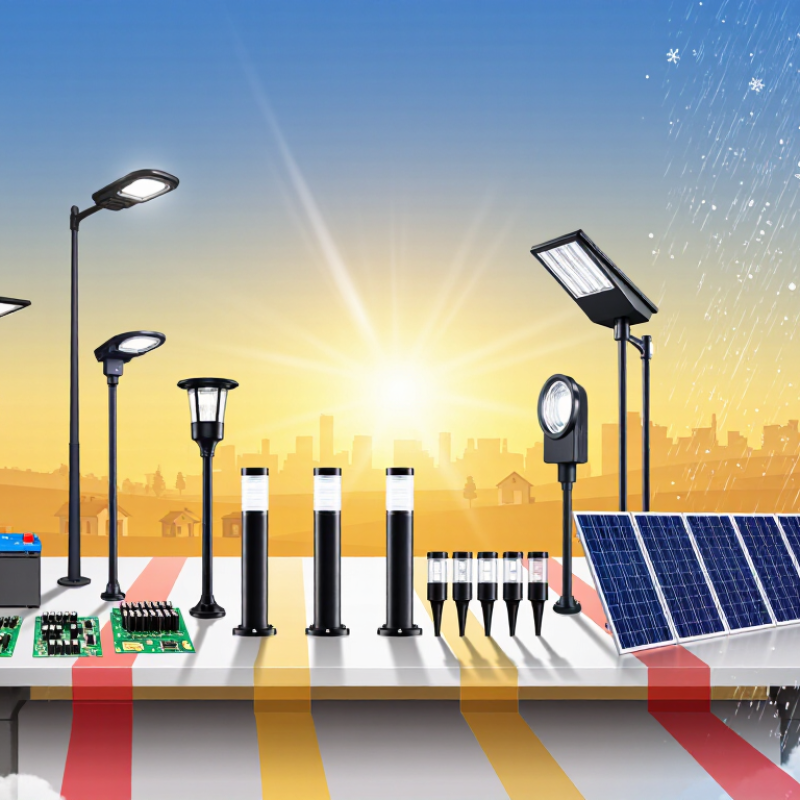
Solar lighting works best when its form matches the task, not simply the advertised brightness. Pathway lights mark garden edges, steps, and entrances, where gentle, evenly spaced illumination is more useful than a harsh beam. Keep it modest. For longer walkways, check the spacing and mounting height; small gaps can leave dark patches after sunset.
Wall-mounted solar lights suit doorways, sheds, and loading areas. Models with motion sensors can conserve stored energy when these spaces are used occasionally. Solar floodlights cover wider areas, such as driveways or yard corners, but their panels need clear exposure to daylight. A bright lamp placed under deep shade may disappoint. That matters.
For roads, parking areas, or shared outdoor spaces, solar street lights need careful attention to pole height, coverage, battery capacity, and expected cloudy periods. Portable solar lanterns are more flexible for patios, temporary work areas, or travel, though their output is usually limited. Match weather resistance and installation hardware to local rain, dust, wind, and temperatures. A specification sheet helps, but real conditions can still vary. Check available sunlight across seasons before deciding where each light belongs.
Use these indicative lumen ranges to compare solar light types with their intended applications. Actual output and useful illumination vary with optics, mounting height, sunlight availability, and product design; check photometric data for project specifications.
Compare measured light output, not panel wattage alone. The IEA PVPS Snapshot of Global PV Markets 2024 reports that global solar capacity exceeded 1.6 terawatts in 2023. That rapid growth offers buyers more choices, but a larger panel does not guarantee brighter ground coverage. Check lumens at the fixture and lux across the intended area. A driveway and a loading bay need different beam patterns.
Battery capacity should be listed in watt-hours, alongside expected runtime and recharge time. Ask whether runtime assumes a full battery and ideal sunshine. It often does. For cloudy regions, compare days of autonomy and performance after partial charging. The World Bank-supported Lighting Global quality framework evaluates off-grid solar products through testing, including durability and performance; use independently verified results where available. A claim like “all-night lighting” needs conditions, not just a headline.
For outdoor fittings, check the stated IP rating under IEC 60529, operating temperature, warranty, and replacement options. Match panel size to local winter sunlight, not only summer averages. Also compare color temperature and color rendering: a very cool beam can make a path feel harsh. One detail buyers sometimes overlook is mounting angle; a shaded panel can quietly cut charging. Specifications help, but real-site shade still deserves a second look.
Before comparing brightness or battery capacity, check the site’s seasonal sunlight. The World Bank and ESMAP Global Solar Atlas provides monthly solar-resource data, including global horizontal irradiation (GHI), for locations worldwide. Use the lowest-sun months, not the annual average, to estimate charging opportunities. A south-facing panel generally receives more sun in the Northern Hemisphere; in the Southern Hemisphere, it usually faces north. Shading matters. Even a branch’s afternoon shadow can reduce charging time.
Climate affects upkeep and output. Dust, pollen, and bird droppings can cover a small panel quickly, while snow may block it for days. A 2018 global soiling assessment in Environmental Science & Technology Letters estimated average photovoltaic soiling losses near 3–4%, with much higher losses at some sites. That figure is not a direct forecast for a garden light, but it shows why local cleaning needs matter. Check the light’s stated operating-temperature range and weather protection, especially for exposed coastal or freezing locations.
Inspect the actual mounting spot at different times of day. A clear noon view can hide morning shade from a wall or tree. Keep the panel clear of roof overhangs, and allow access for wiping it. If the panel is separate, confirm the cable reaches without stretching or crossing a walkway. Installation is rarely perfect. A one-week trial can reveal shade, poor drainage, or a panel angle that needs adjustment.
| Assessment Dimension | What to Check | Practical Guidance | Why It Matters |
|---|---|---|---|
| Available sunlight | Typical daily solar resource at the installation site, including seasonal variation. | Use local solar-irradiance or peak-sun-hour data for the specific location and month. As a broad planning reference, sunny desert areas may receive around 5–7 peak sun hours per day, while cloudy locations may receive around 1.5–3.5; actual values vary by season, terrain, and weather. | Less sunlight means the panel may generate less energy, so the light may need a larger panel, a larger battery, lower brightness, or a shorter operating schedule. |
| Shade and orientation | Nearby trees, buildings, rooflines, poles, and the direction the panel will face. | Choose a position with as much unobstructed daylight as possible. Check for shadows throughout the day, not only at installation time. In the Northern Hemisphere, panels generally face toward the equator; in the Southern Hemisphere, they generally face north. | Even partial shade can reduce panel output. Correct placement helps the battery recharge more reliably. |
| Seasonal daylight | Winter day length, cloudy-season conditions, and the longest expected period of low sunlight. | Size the system for the least-sunny operating season rather than the annual average. Confirm how the product adjusts brightness or operating hours when the battery charge is low. | A light that performs well in summer may provide fewer hours during winter or prolonged cloudy periods. |
| Temperature range | Local minimum and maximum temperatures, including direct-sun heating and cold nights. | Compare the product’s stated operating and charging temperature limits with site conditions. For lithium batteries, check whether the charging system includes low-temperature protection if sub-zero charging is possible. | Temperature affects battery charging, capacity, service life, and the reliability of electronic components. |
| Rain, dust, and humidity | Wind-driven rain, dust exposure, coastal spray, humidity, and possible water pooling. | Check the complete light’s IP rating and the manufacturer’s installation guidance. Under IEC 60529, IP65 indicates dust-tight protection and protection against water jets; IP67 includes protection against temporary immersion under specified test conditions. An IP rating does not by itself establish corrosion resistance. | The right enclosure protection reduces the risk of water or dust entering the product. Coastal sites may also require materials and finishes designed to resist corrosion. |
| Mounting surface and position | Pole, wall, ground, or roof mounting; available space; surface strength; and access for maintenance. | Confirm mounting dimensions, fasteners, panel clearance, and whether the installation surface can support the product in local wind conditions. Place the panel where it receives sunlight while aiming the lamp at the required area. | A suitable mounting position improves solar exposure, lighting coverage, and long-term stability. |
| Wind and exposure | Local wind exposure, height above ground, and the size and shape of the panel and fixture. | For exposed locations, check the manufacturer’s wind-load or installation specifications and use appropriate structural fixings. Do not assume that an outdoor IP rating confirms wind-load suitability. | Wind can stress brackets, poles, and fixings, particularly when a panel is mounted high or at an angle. |
| Required lighting performance | Area to illuminate, mounting height, desired brightness, operating hours, and motion-sensor needs. | Compare photometric data, such as beam distribution and illuminance, rather than relying on wattage or LED count alone. Match the lighting schedule and sensor settings to the site’s daily use. | Appropriate light distribution can improve visibility while avoiding unnecessary energy use and light spill. |
| Battery autonomy and maintenance | Expected hours of operation without adequate sunlight, battery replacement access, and cleaning requirements. | Ask for the stated autonomy conditions, battery type and capacity, replacement procedure, and recommended maintenance. Keep the panel surface clear of leaves, dust, snow, and other obstructions. | Real-world operating time depends on sunlight, battery condition, temperature, brightness settings, and maintenance. |
| Planning note: The sunlight ranges shown are broad illustrative estimates, not a site-specific forecast. Verify local solar data and product specifications before choosing or installing a system. | |||
For global buyers, battery choice should match both climate and use. A garden path light may need only a few hours of evening output, while a security light may face repeated activation overnight. Check the battery type, capacity, and replacement method before ordering. Lithium batteries often perform better in cold conditions than some alternatives, but actual results depend on the cell and control system. Ask suppliers for tested runtime data, not just a large capacity figure.
Weather resistance matters beyond rain. Sunlight can fade plastic housings, coastal air can corrode exposed metal, and dust may collect around seals. Look for clear ingress-protection details and materials suited to the installation site. A light mounted under a roof faces different stress than one beside an open driveway. No rating removes the need for sensible placement.
Maintenance should be realistic. Can the panel be wiped without removing the fixture? Can the battery be replaced with common tools? Small details matter. In dusty areas, a monthly panel cleaning may help; in milder settings, occasional checks may be enough. I have seen buyers focus on brightness and overlook access to the battery. That is an easy mistake, and sometimes the product is simply awkward to service. Check the warranty terms, expected battery life, and availability of replacement parts before committing to a large order.
Global buyers should evaluate a solar-light supplier by traceable quality controls, not polished catalogue photos. Request production-site details, sample inspection records, spare-parts availability, and written warranty terms. Check that test reports identify the exact luminaire, battery, and components being offered. Certifications vary by market, so confirm the relevant standards and documentation with local import or engineering teams. A certificate for a similar model is not enough.
Look closely at battery capacity, usable runtime, light output, and performance after cloudy days. Ask suppliers for test conditions, not just headline figures. For street or area lights, review photometric files and verify that the proposed spacing suits the site. IRENA’s Renewable Power Generation Costs in 2023 reported that newly commissioned utility-scale solar PV had an average electricity cost 56% below fossil-fuel alternatives. That broader trend supports solar’s cost case, but it does not prove any individual light will perform well. Different product, different calculation.
Compare total cost over the expected service period, including freight, installation, replacement batteries, maintenance, and warranty exclusions. A lower purchase price may become expensive if crews must revisit remote sites. Ask for a realistic battery replacement estimate. Then check whether local technicians can source the parts. Small details matter. I would still treat supplier lifespan claims cautiously unless supporting test data and clear assumptions are available.
Lumens show light output, while lux indicates how much light reaches a surface. A driveway and a loading bay may need different beam patterns. Bigger panels do not always mean brighter coverage.
Look for capacity in watt-hours, expected runtime, recharge time, and battery replacement options. Ask whether runtime assumes a full charge and ideal sunshine. It often does.
Compare days of autonomy and runtime after partial charging. Match panel size to winter sunlight at your site, not only summer averages. This estimate can still be imperfect.
Check the stated IP rating, operating temperature, housing materials, and warranty. Coastal air can corrode exposed metal, while dust can collect around seals. Placement still matters.
Battery chemistry can affect performance, but the cell and control system matter too. Ask for tested runtime data, not just a large capacity figure. No simple answer fits every climate.
Dusty areas may need monthly cleaning; milder locations may need only occasional checks. Make sure you can wipe the panel without removing the fixture. Small detail, big difference.
Repeated activation can affect overnight runtime. Check how the stated runtime accounts for activation frequency and battery charge. Real use may differ.
A battery that needs awkward tools can make routine maintenance frustrating. Check expected battery life, warranty terms, and replacement-part availability before ordering many units. Brightness is not everything.
Choosing Solar Power Lights for global projects starts with matching the light type to its intended use, such as pathways, gardens, security areas, or larger outdoor spaces. Compare practical specifications, including brightness, coverage, operating time, charging performance, and controls, rather than focusing on a single figure. Local sunlight, seasonal changes, temperature, rainfall, and the available installation location can all affect how well a system performs.
Also consider battery capacity and expected service life, weather resistance, materials, and how easily components can be maintained or replaced. When evaluating suppliers, review product documentation, relevant certifications, warranty terms, and support options. Compare the full cost over the expected period of use, including installation and maintenance, instead of relying only on the initial purchase price. A careful assessment of application, conditions, quality, and ongoing costs helps buyers select a dependable lighting solution for their needs.

Jianheng