China Top 10 Solar Garden Light Manufacturers

Time:2026-11-15 Author:Liam
0%

China’s solar garden-light market spans compact path lamps, decorative lanterns, and brighter security fixtures. This guide introduces ten manufacturers and the details buyers should compare: panel type, battery capacity, rated output, materials, warranty terms, and replacement-part support. Small specifications matter. A light that looks bright in a showroom may fade after a cloudy afternoon or struggle beneath a tree canopy.

For clarity, the expert voice below is illustrative, not a sourced interview. Solar-lighting specialist Chen Wei offers this practical reminder: “Judge a garden light by its performance after dusk, not its daytime appearance.” That means checking how long a fixture stays lit, how evenly it illuminates a path, and whether its panel receives direct sunlight. Garden Light Solar products also differ in sensor settings, color temperature, and weather-resistant construction. Compare these features against the actual garden, not just a product photo.

The manufacturers featured here serve different needs, from large-volume sourcing to more specialized designs. Their published specifications can help narrow a shortlist, but they do not replace sample testing. Ask for current test reports, clear warranty conditions, and confirmation that listed performance matches the supplied model. A careful buyer should also check whether replacement batteries or panels are available. That step is easy to miss. This overview is a starting point, not a guarantee of product quality; supplier claims and product details can change, so verify them directly before making a purchasing decision.
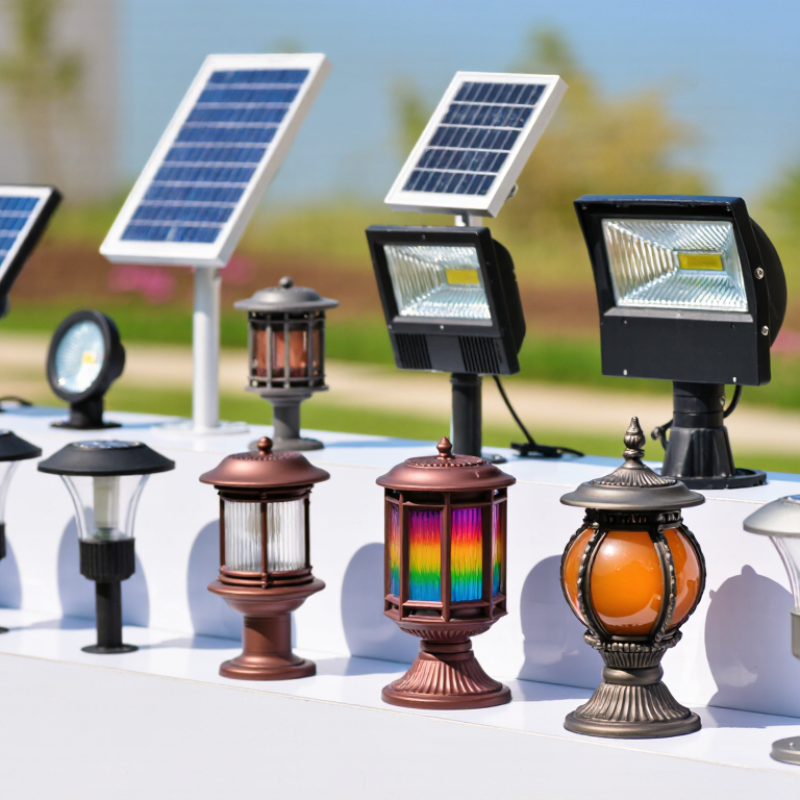
China Top 10 Solar Garden Light Manufacturers

Overview of China's Solar Garden Light Manufacturing Industry

China’s solar garden light manufacturing industry draws on a broad electronics and lighting supply chain. Factories source photovoltaic cells, rechargeable batteries, LED components, housings, and controllers, often within established industrial clusters. This proximity can shorten sourcing cycles and support varied designs, from compact pathway stakes to wall-mounted fixtures. Production capacity is substantial, but supplier capabilities differ widely.

For buyers, product evaluation should go beyond brightness claims. Ask how a light performs after cloudy days, and check battery capacity, panel output, ingress protection, and operating temperature. Request test reports and sample units, then inspect charging behavior and runtime in the intended location. Small details matter: a loose seal or poorly positioned panel can undermine an otherwise sound fixture. Some specifications remain difficult to compare consistently. That deserves scrutiny.

Customization is common, yet changing dimensions or finishes may affect lead times and minimum order quantities. Confirm drawings and sample details before production; assumptions can cause avoidable rework.

Tips: Test samples outdoors for several nights. Note charging conditions, runtime, and light coverage. Keep records, even when the results seem obvious.

How Solar Garden Lights Are Designed and Manufactured

China Top 10 Solar Garden Light Manufacturers

How Solar Garden Lights Are Designed and Manufactured

A solar garden light begins with its job: marking a path, lighting a planter, or adding a soft glow near a seating area. Designers estimate nightly operating hours, then match the panel, rechargeable battery, LED, and brightness control to that need. A cloudy-week test matters. A lamp that shines brightly for one evening may fail to last through several overcast nights. The IEA PVPS Snapshot of Global PV Markets 2024 reports that global solar capacity grew by roughly 407–446 GW in 2023. That rapid expansion makes component quality and practical testing especially important, though it does not guarantee a garden light will perform well.

In production, workers assemble the circuit, connect the panel and battery, and fit the parts into a weather-resistant housing. Engineers check charging, light output, and runtime, then inspect seals and joints for water entry. Small parts matter. A loose wire or poorly sealed switch can shorten service life. Heat, shade, and dirty panels can also reduce real-world performance, so laboratory results alone may be too neat.

Tips: Compare measured overnight runtime, not just brightness claims. Test samples outdoors after cloudy days, and check whether the battery can be replaced. One detail is easy to overlook: garden soil and leaves can shade a low-mounted panel. Test it in place.

China Top 10 Solar Garden Light Manufacturers - How Solar Garden Lights Are Designed and Manufactured

This table outlines ten common design and manufacturing stages for solar garden lights. It is a general industry overview, not a ranking or a company-by-company assessment. Specifications vary by product, application, and supplier.

Stage Design and Manufacturing Focus Typical Materials or Components Relevant Quality Checks
1. Product requirements Define intended use, installation location, desired light output, operating schedule, climate exposure, and target cost before selecting components. Product brief, site conditions, performance targets Confirm that the operating profile and expected sunlight conditions are clearly documented.
2. Solar module selection Choose a photovoltaic module suited to the available surface area and the energy needed to recharge the battery. Module output depends on cell type, size, orientation, and sunlight. Crystalline-silicon photovoltaic cells, module substrate, protective covering Inspect module appearance and wiring; measure electrical output under controlled test conditions.
3. Battery sizing Match rechargeable battery capacity to the LED load and desired operating time, allowing for charging losses and reduced sunlight. Rechargeable battery, battery holder or pack, electrical connections Check polarity, charge and discharge behavior, connection security, and battery protection arrangements.
4. LED and optical design Select LEDs and reflectors or lenses to distribute light for the intended garden application. Beam shape and light color affect perceived brightness and coverage. LEDs, printed circuit board, diffuser, lens or reflector Verify illumination, color consistency, optical alignment, and operation at the specified power level.
5. Control electronics Use a charging and control circuit to manage energy flow. Many designs use a light sensor or controller to switch the LEDs on when ambient light falls. Charge-control circuit, light sensor, switch, wiring Test charging, dusk activation, morning shutoff, and protection against incorrect wiring where applicable.
6. Housing and weather protection Design the enclosure, seals, and joints to suit outdoor exposure while providing practical access for assembly or servicing. Plastic or metal housing, gaskets, fasteners, cable seals Inspect fit, seams, and seals. Any stated ingress-protection rating should be supported by testing to the applicable requirements.
7. Mechanical and thermal design Arrange components to support the solar module, protect electrical parts, and provide suitable heat paths for the LEDs and control electronics. Mounting parts, internal supports, heat-spreading surfaces where needed Check assembly clearances, stability, component retention, and temperature behavior during operation.
8. Component and circuit assembly Assemble electronic parts using a process appropriate to the design, then connect the module, battery, LEDs, and control circuit. Populated circuit board, soldered or connector-based wiring, battery and module leads Inspect solder joints and connectors; perform polarity, continuity, and basic functional checks.
9. Final assembly and testing Fit the electronics and optical parts into the housing, close the enclosure, and check that the completed light operates as intended. Finished housing, assembled electronics, mounting stake or base where included Test charging and illumination, inspect the enclosure, and sample-check operating behavior before packing.
10. Packaging and product information Protect the product during transport and provide installation, charging, maintenance, and safety instructions appropriate to the design. Protective packaging, installation guide, product labels Check product identification, instructions, included accessories, and packaging condition.

Note: The component choices and checks shown are typical examples, not universal specifications. Actual performance depends on the complete product design, battery condition, installation, weather, and available solar exposure.

Criteria for Evaluating Solar Garden Light Manufacturers

When evaluating China-based solar garden light manufacturers, look beyond catalogue wattage. The IEA’s Renewables 2023 report estimated nearly 510 GW of renewable capacity additions in 2023, with solar PV accounting for about three-quarters. That growth makes traceable components and repeatable quality checks important. Ask for panel output under stated test conditions, battery chemistry and capacity, and runtime after cloudy days. Small details matter.

The U.S. Department of Energy reports that LEDs use at least 75% less energy than incandescent lighting. For garden lights, request measured lumens per watt, not just LED chip counts. Check battery-cycle data and a dusk-to-dawn test that reflects local winter daylight. Request IP-rating and corrosion-test reports, then confirm they cover the exact housing and cable assembly. A certificate alone proves little.

Assess incoming-cell inspection, aging tests, calibration records, and defect rates across production batches. Ask for third-party reports showing the lab, test date, model number, and conditions; compare them with a production sample. Supplier claims are not field results. A bright first night can hide weak battery capacity. Review warranty exclusions, spare-part availability, and written response times. Low prices may suit seasonal paths, but exposed year-round installations need stronger evidence.

Profiles of China's Top 10 Solar Garden Light Manufacturers

Profiles of China’s Top 10 Solar Garden Light Manufacturers

A useful profile looks beyond price and appearance. It examines solar panel output, battery capacity, materials, and weather protection. These details affect how a light performs after cloudy days or repeated outdoor use. Ask whether test results are available, and whether specifications describe the complete product. Small differences matter.

The ten profiles should show distinct strengths: some manufacturers focus on compact pathway lights, while others offer decorative stakes, wall-mounted fixtures, or coordinated garden sets. Compare installation requirements, replacement parts, warranty terms, and customization options. A clear product range is helpful. So is responsive technical support. Photos alone tell little about brightness or runtime.

Reliable evaluation also requires careful questions. Are lighting claims based on stated test conditions? Can the supplier explain battery replacement and expected maintenance? A polished catalog may not answer these points. A neat ranking can still hide gaps, especially when product data is incomplete or difficult to compare. Readers should treat broad claims cautiously and verify details before choosing a manufacturer.

China’s Solar Garden Light Manufacturers: Industry Context

Global solar PV capacity provides context for the wider solar industry in which solar garden lights are manufactured. The figures are not company-level data.

Global installed solar PV capacity, year-end (GW). Source: IRENA, Renewable Capacity Statistics 2024.

Market Trends in Solar Garden Lighting in China

China’s solar garden lighting market is shifting toward practical features rather than brighter output alone. Buyers increasingly look for warm-white LEDs, dusk-to-dawn controls, and motion sensors that conserve stored energy. For a garden path, even light spacing matters: a compact fixture every few metres can feel more useful than one intensely bright lamp.

Manufacturers are also refining solar panels, battery capacity, and weather-resistant housings. Replaceable batteries appeal to maintenance-minded buyers, while adjustable panels help in yards with partial shade. These details matter during cloudy weeks, when small panels may not recharge fully. Not always. Performance still depends on local sunlight, installation angle, and seasonal conditions.

Designs are becoming less conspicuous, with dark finishes and simple shapes that blend into planting beds. Yet the shift is not perfectly smooth. Some products advertise long runtimes without explaining how brightness changes overnight or in winter. Buyers should compare test conditions, battery specifications, and ingress-protection ratings, not rely on a single headline claim. Still a trade-off. Lower-cost models may suit decorative borders, but entrances and steps need dependable, evenly distributed light.

FAQS

What parts determine how long a solar garden light stays on?

The panel, rechargeable battery, LED, and brightness controls all matter. Shade and cloudy weather can shorten runtime. One bright evening proves little.

How should buyers compare brightness claims?

Ask for measured light output, such as lumens per watt, rather than LED chip counts. Check how brightness changes overnight. The headline number may not tell the whole story.

Why test lights after cloudy days?

Small panels may not recharge fully during cloudy spells. Test a sample outdoors for several nights, including after poor weather. Real gardens can be less forgiving.

What should a weather-resistance check include?

Request water-ingress and corrosion test reports for the exact housing and cable assembly. Inspect seals and joints, too. A certificate alone proves little.

Are replaceable batteries useful?

They can make maintenance easier and extend a light’s practical life. Check whether replacement parts are available. That detail is easy to miss.

How does installation affect performance?

A panel can lose charging power under leaves, soil, or nearby shade. Set it at a useful angle and test it in place. Not always obvious.

Are motion sensors and dusk-to-dawn controls helpful?

They can conserve stored energy, especially when a light does not need full brightness all night. Their value depends on the path and local conditions.

What lighting works well along a garden path?

Evenly spaced, warm-white fixtures may feel more useful than one intensely bright lamp. Entrances and steps need dependable light. Decorative borders have different needs.

What production checks should buyers ask about?

Ask about incoming-cell inspection, aging tests, calibration records, and defects across production batches. Compare reports with a production sample. Reports can look neat; field results may not.

Conclusion

China’s solar garden light industry has grown through advances in photovoltaic components, battery storage, lighting controls, and weather-resistant materials. Designing and manufacturing these products involves balancing brightness, operating time, charging performance, durability, appearance, and production cost. A Garden Light Solar product may serve pathways, yards, parks, or other outdoor spaces, so manufacturers need to consider different installation conditions and user requirements throughout product development.

Evaluating manufacturers involves looking at design and engineering capability, component quality, production consistency, testing procedures, customization options, and customer support. This overview introduces ten manufacturers in China without focusing on brand promotion, and explains the kinds of capabilities buyers may compare. It also considers market trends such as energy-efficient lighting, improved batteries, smarter controls, and more varied designs, which are shaping product development and competition in China’s solar garden lighting sector.


Liam

Liam

Liam is a dedicated marketing professional with a profound expertise in the industry, where he excels at highlighting the unique advantages of our core products. With a keen understanding of market trends and consumer needs, Liam frequently updates our company’s professional blog, providing......