A welcoming path can change the feel of an outdoor space after sunset. Solar Path Lights provide gentle illumination without adding new wiring or increasing monthly electricity use. They can outline garden borders, steps, driveways, and walkways with a warm, practical glow. However, appearance alone does not prove quality. A beautiful fixture may produce weak light or fail after several rainy nights.
This guide examines the 10 Best Solar Path Lights for Outdoor Use through practical details. Each option should be judged by brightness, lighting duration, charging performance, weather resistance, and installation stability. Materials also matter. Aluminum, stainless steel, and thick plastic usually handle outdoor conditions better than fragile decorative parts. A secure stake is important, especially in loose soil or windy gardens. Some models look bright in photographs but seem underpowered beside a real pathway. That difference deserves attention.
Real outdoor performance can vary. Shade, winter temperatures, dust, and cloudy weather affect charging results. No light is perfect. Even careful comparisons have limits because gardens and climates differ. Therefore, the recommendations focus on reliable everyday use rather than exaggerated claims. Readers should check the product’s stated weather rating and warranty before purchasing. Placement matters too. Spacing lights evenly can create a calmer, safer appearance than crowding them together. Small adjustments may improve the result more than choosing the most expensive model. This review aims to make that choice clearer, while acknowledging that personal preferences and local conditions still matter.
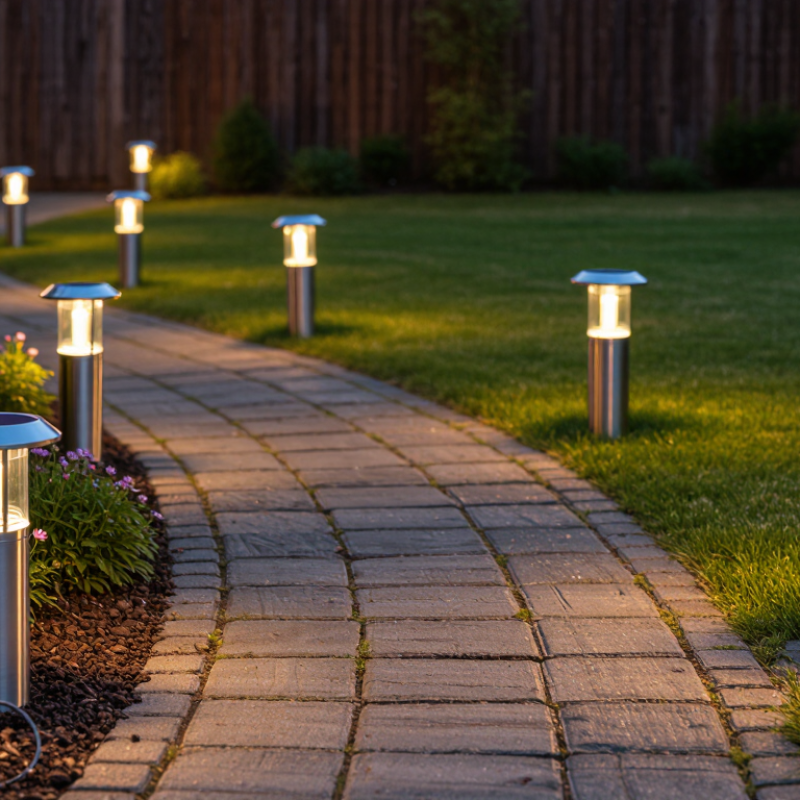
10 Best Solar Path Lights for Outdoor Use
What Makes a Solar Path Light Suitable for Outdoor Use
A suitable solar path light must handle rain, dust, temperature changes, and accidental splashes. Look for a clearly stated outdoor protection rating, such as IP65 or higher. IP44 may work in sheltered areas, but it offers less protection from dust and water. The housing should resist rust, while the stake should feel firm rather than brittle. Stainless steel, coated aluminum, and durable outdoor plastics usually perform better over time.
Brightness matters, but more light is not always better. For garden paths, soft illumination often improves visibility without creating glare. A wide beam can reveal uneven paving, tree roots, and steps more effectively than a narrow beam. Choose lights with rechargeable batteries that match the local climate. Cold nights can reduce battery performance. Cloudy weather also limits charging, even when the panel looks clean.
Placement affects performance more than many buyers expect. Install each panel away from fences, walls, and dense plants. I have seen attractive lights fail because a nearby shrub shaded them all afternoon. Clean the panel regularly, especially after pollen or dust settles. No model works perfectly. Some lights need seasonal repositioning, and compact units may provide only a few hours of output in winter. Checking the warranty, replacement battery access, and stated runtime can prevent disappointing outdoor use.
When comparing the 10 best solar path lights, start with brightness and coverage. Lumens matter, but higher output does not always create better visibility. A soft, wide beam can illuminate steps without producing harsh glare. In my garden, evenly spaced lights worked better than a few very bright fixtures. Check the beam angle, light color, and spacing recommendations before buying.
Battery capacity affects how long each light remains useful after sunset. Look for clear runtime information under realistic conditions, not only ideal laboratory results. A larger solar panel may recharge faster during short winter days. However, panel placement matters too. Shade from trees can reduce performance significantly. Replaceable batteries are valuable because rechargeable cells slowly lose capacity.
Outdoor durability deserves close attention. An IP65 rating generally offers stronger protection from dust and water jets than lower ratings, but it does not make a fixture indestructible. Choose corrosion-resistant materials for damp gardens and secure stakes for loose soil. Motion sensors may save energy, while dusk-to-dawn sensors provide steadier pathway lighting. Installation should require minimal tools and allow easy cleaning. My own comparison revealed an imperfect detail: attractive designs often had smaller panels. A lamp can look elegant and still perform poorly after several cloudy nights. Check the warranty, charging instructions, and return terms before judging appearance alone.
Solar path lights do more than mark a walkway. Their design should match the outdoor task, ground surface, and available sunlight. In my experience, stake lights work well along straight garden paths, while low-profile disk lights suit lawns and narrow borders. Lantern-style fixtures add a softer appearance near entrances. Globe lights spread light widely around patios, but they can look too bright beside delicate plants. Recessed ground lights create a clean finish on paving, though installation requires stable, level surfaces.
Different solar path light designs serve different outdoor applications. Adjustable heads help direct light toward steps, uneven ground, or decorative trees. Motion-activated models are useful beside side gates and storage areas, where constant lighting is unnecessary. Warm-white lights usually make seating areas feel comfortable, while cooler light can improve visibility on long paths. Copper-tone housings may develop a natural surface over time. That change is not always attractive.
Choose fixtures with weather-resistant construction, sealed battery compartments, and replaceable rechargeable cells when possible. Check the rated protection level, but do not treat it as permanent waterproofing. I once placed lights beneath dense shrubs, and their batteries emptied quickly after cloudy days. That mistake changed my placement habits. Keep panels clear of leaves, sprinkler spray, and strong evening shadows. Allow space between fixtures so the path appears evenly lit rather than dotted with harsh pools. Some solar lights advertise long runtimes, yet winter performance can be noticeably shorter. Test one section before installing ten.
| Rank | Solar Path Light Design | Typical Light Output | Light Color | Typical Night Runtime | Solar Panel and Battery | Weather Protection | Recommended Outdoor Application | Key Advantage |
|---|---|---|---|---|---|---|---|---|
| 1 | Classic Stake Lantern | 15–30 lumens | Warm white, 2700–3000K | 8–12 hours after a full sunny-day charge | Built-in crystalline or amorphous panel; rechargeable Ni-MH battery, commonly 600–1,200 mAh | IP44–IP65 | Front walkways, garden borders, driveways, and general landscape navigation | Balanced brightness, simple installation, and broad everyday usability |
| 2 | Low-Profile Disk Light | 10–25 lumens | Warm white, 2700–3000K | 8–10 hours under normal summer charging conditions | Compact top-mounted panel; rechargeable Ni-MH battery, commonly 300–800 mAh | IP44–IP65 | Low planting beds, narrow paths, edging around lawns, and areas where a discreet appearance is preferred | Minimal visual obstruction and a clean, modern silhouette |
| 3 | Decorative Flame-Effect Light | 5–20 lumens | Amber or warm white, approximately 1800–3000K | 6–10 hours after adequate solar charging | Integrated panel; rechargeable Ni-MH or lithium battery, commonly 400–1,000 mAh | IP44–IP65 | Patios, entrances, entertaining areas, cottage gardens, and decorative walkways | Creates a flickering visual effect without using an open flame |
| 4 | Bright Security-Style Path Light | 80–200 lumens | Neutral to cool white, 4000–6500K | 6–10 hours at reduced output; shorter at maximum brightness | Larger panel with lithium-ion battery, commonly 1,200–2,000 mAh | IP65–IP67 | Side paths, steps, gates, utility areas, and locations needing stronger visibility | Higher illumination than decorative models and better visibility for movement |
| 5 | Motion-Sensor Solar Path Light | 20–200 lumens | Warm, neutral, or cool white depending on the model | Several weeks of standby operation; typically 20–60 activations per night when fully charged | Solar panel with lithium-ion battery, commonly 1,200–2,200 mAh | IP44–IP65 | Entry paths, stair approaches, side gates, garages, and security-sensitive areas | Conserves stored energy by illuminating brightly only when movement is detected |
| 6 | Adjustable Spotlight Path Light | 50–150 lumens | Warm white or neutral white, 2700–4000K | 6–10 hours at typical operating brightness | Separate or adjustable panel; lithium-ion battery, commonly 1,000–2,000 mAh | IP65–IP67 | Highlighting steps, trees, signs, architectural features, and uneven paths | Directional beam control reduces wasted light and improves target illumination |
| 7 | Recessed In-Ground Paver Light | 5–30 lumens | Warm white, neutral white, or color-changing LED | 6–10 hours after a full charge | Integrated panel; rechargeable battery, commonly 300–1,000 mAh | IP65–IP68 | Driveway edges, paving, decks, terraces, and flush-mounted pedestrian routes | Low-profile installation that minimizes trip hazards and visual clutter |
| 8 | Decorative Glass or Frosted-Globe Light | 8–25 lumens | Soft warm white, 2700–3000K | 8–12 hours in favorable charging conditions | Integrated panel; rechargeable Ni-MH battery, commonly 600–1,200 mAh | IP44–IP65 | Flower gardens, courtyard paths, poolside landscaping, and decorative borders | Diffuses light softly and adds a decorative focal point to outdoor spaces |
| 9 | Copper-Tone or Metal-Finish Lantern | 10–35 lumens | Warm white, 2700–3000K | 8–12 hours after a full sunny-day charge | Integrated panel; rechargeable Ni-MH or lithium battery, commonly 600–1,500 mAh | IP44–IP65 | Formal gardens, heritage-style landscapes, entrances, and landscaped walkways | Provides a durable decorative finish and complements traditional outdoor design |
| 10 | Two-Piece Remote-Panel Path Light | 30–120 lumens | Warm white or neutral white, 2700–4000K | 8–12 hours when the panel receives sufficient direct sunlight | Separate solar panel connected by cable; lithium-ion battery, commonly 1,000–2,500 mAh | IP65–IP67 | Shaded walkways, covered garden edges, north-facing paths, and areas distant from direct sunlight | Allows the light fixture to be placed in shade while the panel is positioned for better solar exposure |
Installing solar path lights well requires more than lining them beside a walkway. Begin by observing the route after sunset. Mark steps, turns, uneven paving, and areas hidden by shrubs. Place each light 6 to 10 feet apart, then adjust the spacing where shadows appear. Keep fixtures about 12 to 18 inches from the path edge. This reduces glare while keeping the walking surface visible.
Sunlight matters most. The U.S. Department of Energy reports that LED lighting uses at least 75% less energy than incandescent lighting and lasts up to 25 times longer. Solar fixtures still need several hours of direct sunlight, so avoid dense shade, north-facing walls, and locations beneath broad leaves. A light panel facing open sky usually performs better than one pointed toward a bright window. Clean the panel monthly during dusty seasons.
Aim the beam downward. Never point it toward eye level, nearby homes, or passing vehicles. The International Dark-Sky Association encourages shielded lighting that directs illumination only where needed, especially as the 2016 Science Advances study found that more than 80% of people live under light-polluted skies. I once placed identical lights in a perfect straight line; the result looked tidy but created a harsh runway effect. Alternating positions felt safer and softer. Use warm-white light near seating areas, and reserve brighter output for steps. Test the layout for two nights before fixing every stake permanently.
Compare common solar path-light styles by their typical light output. Higher-lumen options are better for driveways and steps, while lower-lumen styles create softer garden illumination.
For effective installation, place path lights about 6–8 feet apart, alternate them along both sides of a walkway, and position each solar panel where it receives several hours of direct sunlight. Keep fixtures away from tree shade and strong artificial light sources.
Choosing among the 10 best solar path lights requires more than brightness claims. Maintenance often determines real value. Wipe each panel monthly, especially beneath trees or near dusty paths. A thin film can reduce charging noticeably. Check drainage holes and wiring after heavy rain. Small details matter.
Performance depends on sunlight, battery health, and temperature. The U.S. Department of Energy reports that quality LED systems can deliver 25,000 to 50,000 hours of rated life. However, the fixture may fail earlier because of battery wear or moisture. NREL’s photovoltaic degradation research commonly cites about 0.5% annual output loss for solar modules. Small panels can still underperform faster in shade. Test them in winter, not only during bright summer evenings.
Battery replacement is the uncomfortable cost. Many rechargeable cells last roughly two to five years, depending on cycles, heat, and charging depth. Confirm that the battery compartment is accessible before installation. A sealed design looks cleaner, but repairs become harder. Look for warm, even illumination, stable dusk activation, and corrosion-resistant housing. A ten-hour runtime claim may assume ideal conditions. Real gardens are rarely ideal. Comparing replacement batteries, lumen stability, warranty terms, and disposal guidance reveals stronger long-term value than the lowest purchase price. Sources: U.S. Department of Energy Solid-State Lighting reports; National Renewable Energy Laboratory photovoltaic degradation research.
Look for IP65 or higher protection. IP44 suits sheltered areas, but offers less dust and water resistance. The housing should resist rust and accidental splashes.
Coated aluminum, stainless steel, and durable outdoor plastics usually perform well. The stake should feel firm, not brittle. Cheap-looking plastic can disappoint.
Soft light often works best for garden paths. A wide beam reveals steps, roots, and uneven paving. Excessive brightness can create glare. More light is not always safer.
Keep fixtures about 12 to 18 inches from the path edge. Place them roughly 6 to 10 feet apart. Adjust spacing near steps and turns. Perfect symmetry can look harsh.
Most fixtures need several hours of direct sunlight. Avoid dense shade, fences, walls, and broad leaves. Open sky usually charges panels better. Cloudy days reduce charging.
Cold nights can reduce rechargeable battery performance. Short winter days also limit charging time. Runtime may become noticeably shorter. That part is easy to underestimate.
Stake lights suit straight garden paths. Disk lights work well on lawns and narrow borders. Recessed lights create a clean look on level paving. Motion-activated fixtures suit side gates and storage areas.
Aim the beam downward, away from eyes, homes, and vehicles. Use warmer light near seating areas. Reserve brighter output for steps. Test the layout for two nights before permanent installation.
Clean each panel monthly during dusty seasons. Remove pollen, leaves, and dirt from the surface. Keep panels away from sprinkler spray. Check battery access and warranty details before buying.
Choosing the right Solar Path Lights can improve outdoor safety, visibility, and curb appeal while reducing energy use. This guide explains what makes a solar path light suitable for outdoor conditions, including weather resistance, dependable solar charging, battery capacity, brightness, operating time, and sturdy construction. It also compares key features across ten leading options and explores different designs, from compact fixtures for narrow walkways to decorative styles for gardens, driveways, and patios.
The guide also provides practical advice for installation and positioning, such as placing lights where they receive sufficient sunlight, spacing them evenly, and directing illumination toward walking areas without creating glare. In addition, it covers routine maintenance, seasonal performance, battery care, and long-term value. By considering design, lighting performance, durability, installation needs, and upkeep, readers can select Solar Path Lights that provide consistent outdoor illumination and remain effective through changing weather conditions.

Jianheng